






Desert & Off-Road Car Rental

Why Choose an SUV Rental in Dubai?
The UAE is one of the most dramatic off-road destinations in the world and most visitors never leave the tarmac. A 4WD car rental Dubai desert adventure changes everything. Within 45 minutes of Downtown Dubai, you can be navigating towering orange dunes at Al Qudra. Within two hours, you are in the Hajar Mountains of Hatta or Fujairah. With the right vehicle, the right preparation, and the knowledge in this guide, the UAE reveals a completely different country from the one tourists see from hotel balconies and air-conditioned tour buses.
This guide covers every dimension of off road car rental Dubai visitors and residents need from choosing a genuinely capable 4WD vehicle and understanding your off-road insurance position, to sand driving techniques, essential desert gear, wadi bashing routes, the extraordinary Liwa dunes, the RAK mountain road experience, and where to camp legally under UAE skies. Rent a car in Dubai with Headway and unlock the adventure version of the UAE.
Self-Drive Desert Safari Safety: Rules That Cannot Be Broken
Self drive desert safari safety is not a suggestion it is the foundation of every off-road adventure that ends well. The UAE desert is genuinely beautiful and genuinely dangerous. Heat, disorientation, vehicle entrapment, and mobile coverage gaps combine to create an environment that punishes preparation gaps quickly. These rules apply on every off-road trip, every time.
Never drive alone
A convoy of at least two vehicles is the absolute minimum for any desert or off-road trip. One vehicle becomes stuck or breaks down the other recovers it. There are no exceptions to this rule in remote areas, especially dune driving
Tell someone your route
Before leaving tarmac, share your planned route and expected return time with someone not on the trip. UAE emergency services use this information when responding to incidents in remote areas
Download offline maps before you leave
Mobile data coverage in the UAE desert particularly in the Liwa, Lahbab, and remote wadi areas is patchy to nonexistent. Google Maps offline tiles cover your planned area; download them on WiFi before departure
Carry water for twice your expected time
The calculation is simple if you expect to be out 4 hours, carry 8 hours of water at minimum. Heat exhaustion in UAE desert conditions develops faster than most visitors expect, and dehydration impairs decision-making before physical symptoms become obvious
Start early, return before midday in summer
From May to September, desert surface temperatures reach 60°C+ by 10am. Even in cooler months, early morning desert driving is significantly more comfortable and less risky than afternoon sessions
Know your vehicle before you leave tarmac
Understand your 4WD system how to engage low-range, what the sand mode does, how to read your tyre pressure monitoring system. Practice these in a safe area before attempting serious terrain
4WD Car Rental Dubai Desert: Choosing the Right Machine
The 4WD car rental Dubai desert choice is more nuanced than simply picking the largest SUV available. Different off-road environments require different vehicle capabilities and choosing right for your specific adventure makes the difference between a confident, enjoyable experience and a recovery situation.
| Adventure Type | 4WD + Low Range | AWD Crossover |
|---|---|---|
| Graded Desert Tracks | ✓ | ✓ |
| Al Qudra Lakes Access Road | ✓ | ✓ |
| Light Dune Tracks (marked) | ✓ | With care |
| Deep Dune Bashing (Liwa, Lahbab) | ✓ | ✗ |
| Wadi Bashing (rocky tracks) | ✓ | Light wadis only |
| Hatta Mountain Tracks | ✓ | Graded tracks OK |
| RAK Jebel Jais Road | ✓ | ✓ |
| Remote Liwa Desert (unsupported) | ✓ | ✗ |
The clear rule: if your adventure involves genuine deep-sand dune driving — not just tracks through the desert but actual dune face ascent and descent — you need a vehicle with a true 4WD system including low-range gear. An AWD crossover will handle graded tracks and light desert excursions comfortably, but it has hard capability limits once the terrain becomes serious. Book your vehicle to match your intended adventure, not your aspirational one.
Off-Road Tracks Dubai Guide: Where to Actually Go
The off-road tracks Dubai guide most visitors need cover four distinct adventure categories , each with its own vehicle requirements, skill level, and experience profile. Here is where the UAE’s best off-road adventures are, and what you need to reach them.
Desert Dune Safari — Al Qudra & Lahbab
Al Qudra is the most accessible desert off-road experience from Dubai — 45 minutes from the city centre via the E66 and Al Qudra Road. The desert tracks lead through rolling terrain to the Al Qudra Lakes, where flamingos and wildlife inhabit mirror-calm water pools surrounded by dunes. Sand driving tips Dubai tourist guides consistently prioritise Al Qudra for first-timers: the tracks are graded and well-used, AWD is sufficient, and UAE Police/RTA monitor the area regularly. The Lahbab red dune area south of Dubai is more challenging — taller, softer dunes that demand a full 4WD setup and experienced convoy driving.
Wadi Bashing — Hatta, Fujairah & Masafi
Wadi bashing car rental Dubai adventures are among the most technically interesting off-road experiences the UAE offers. A wadi is a dry river bed — carved over millennia into the Hajar Mountain rock, creating rocky tracks, sudden elevation changes, and pools of clear water in the mountain season (October–April). Hatta's wadi tracks near the reservoir are the most accessible for a first-timer with a 4WD rental. The Masafi-Dibba route through the mountains toward Fujairah offers more challenging terrain with genuinely dramatic scenery. The key difference from desert driving: rocky surfaces require lower tyre pressure and more careful line selection than sand.
Ras Al Khaimah Mountain Drive — Jebel Jais
The Ras Al Khaimah mountain drive up Jebel Jais — UAE's highest mountain at 1,934 metres — is the UAE's finest tarmac mountain driving experience, not a traditional off-road route. The switchback road to the summit is fully paved and well-maintained, making it accessible to any vehicle in the Headway fleet. What makes it special is the driving experience itself: 34 kilometres of well-engineered mountain road with dramatic hairpin turns, sheer drops, and views across the Hajar range to Oman. The zipline at the summit is the world's longest. Arrive at the base by 8am to reach the summit before the daytime vehicle restriction periods. AWD is comfortable but not strictly necessary on the tarmac route.
Liwa Dunes Car Rental Adventure: The UAE's Most Remote Experience
Liwa dunes car rental adventure sits at the very top of UAE off-road ambition the Liwa Oasis and the Rub’ al Khali (Empty Quarter) megadunes represent some of the world’s most dramatic desert terrain, located approximately 220 kilometres south of Abu Dhabi. This is not a beginner’s adventure. Liwa requires a full 4WD vehicle, a convoy, experienced desert navigation, and a genuine safety plan.
The Liwa Eithad tower area offers the first accessible view of the scale of the Empty Quarter dunes from paved road. Beyond this point, proper off-road begins dunes that tower above 100 metres, soft red sand that consumes unprepared vehicles quickly, and a remoteness that means any recovery operation is hours away from tarmac. Headway 4WD rentals cleared for the Liwa area come with specific pre-trip guidance. The Moreeb Hill area near Liwa, the venue of the annual dune climbing festival, gives context to the scale of terrain you are entering.
Sand Driving Tips Dubai Tourist: The Techniques That Keep You Moving
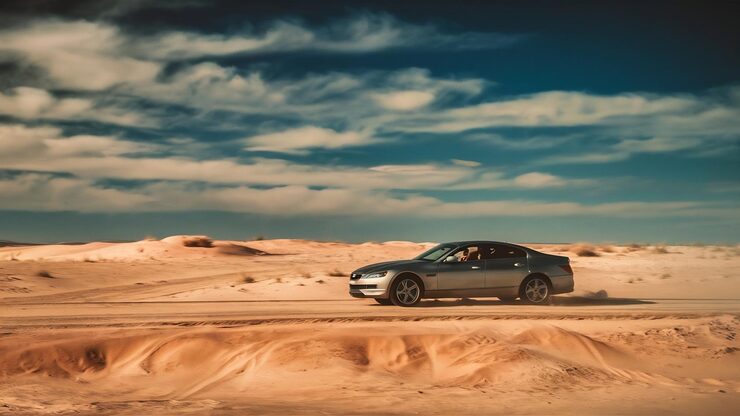
Sand driving tips Dubai tourist guides all agree on the fundamentals and for good reason. These techniques are the difference between a flowing, enjoyable desert experience and being stuck in sand waiting for a recovery vehicle. Master these before you leave the main track.
Deflate your tyres — this is the single most important technique
Reduce tyre pressure to 18–20 PSI before driving on sand (from the standard 32–36 PSI). Deflated tyres spread the vehicle’s weight over a larger surface area, dramatically improving flotation on soft sand. Re-inflate to normal pressure before returning to tarmac roads — driving on road with deflated tyres is dangerous and damages the tyres
Maintain momentum on dunes — do not stop mid-face
Approach a dune face with enough speed to carry you over the crest. If you lose momentum mid-face, you will sink. If you begin to sink, do not spin the wheels — this digs you in faster. Reverse carefully down the way you came and try again with more speed
Always look before you drop
Before cresting a dune, stop and check what is on the other side. A vertical drop, another vehicle, or a wadi edge are all possibilities you cannot see from the approach. Walk to the top, assess the descent, then drive it
If stuck — do not spin
The moment your vehicle begins to sink or is stationary in sand, stop all wheel spin immediately. Use your recovery boards to create a bridge under the tyres, deflate further if not already at minimum pressure, and reverse out slowly with steady throttle
Off-Road Insurance Car Rental Dubai: What Is and Isn't Covered
Off road insurance car rental Dubai arrangements require specific attention that standard rental insurance does not address. The standard third-party liability and Collision Damage Waiver (CDW) included with most Headway rentals covers on-road incidents — but the coverage position for off-road use depends entirely on what has been pre-approved.
Standard CDW does not automatically cover off-road damage. Damage to the undercarriage, tyres, wheels, and body from off-road driving is typically excluded from standard CDW unless off-road use has been specifically pre-approved and supplementary cover arranged. This is industry-standard across UAE rental companies — not a Headway-specific position.
Headway offers designated off-road capable vehicles that come with pre-approved off-road use terms and appropriate supplementary coverage. These vehicles are specifically maintained and prepared for off-road use — not standard fleet vehicles being used off-road by exception. Always choose a designated off-road vehicle rather than taking a standard sedan or crossover into terrain it is not rated for.
Desert Road Trip Gear Dubai: Pack This Before You Leave
Desert road trip gear Dubai preparation follows a simple logic: the further you go from tarmac, the more you need to be self-sufficient. This is not about carrying everything imaginable it is about having the specific items that resolve the most likely problems efficiently.
Water — Minimum 4L Per Person
Carry significantly more than you expect to drink. Dehydration and heat stroke are the most common desert medical emergencies. Cold water in an insulated flask is worth the weight.
Recovery Boards (Sand Plates)
Essential for any dune or soft-sand driving. Placed under the driven wheels of a stuck vehicle, they create a solid surface for the tyre to grip and drive out from. Never go off-road without them.
Portable Air Compressor
You deflate your tyres before sand driving — you need a compressor to re-inflate before returning to tarmac. A 12V compressor plugged into the car's power outlet handles all four tyres in under 10 minutes.
Offline Maps — Downloaded Beforehand
Google Maps offline tiles cover your planned area and work without mobile data. Download at home before departure — the file sizes are too large for data-limited connections in the desert.
First Aid Kit
First Aid Kit A basic kit covering cuts, minor burns, and blister treatment. In the desert environment, even small wounds can deteriorate quickly in heat and dust. Carry antiseptic, bandages, and an emergency space blanket.
Tow Strap & Shackles
For vehicle-to-vehicle recovery when a sand plate alone is insufficient. Ensure the strap is rated for your vehicle's weight and that both vehicles have accessible recovery points. Do not attach to a tow ball — recovery points only.
Torch & Power Bank
Desert trips that run longer than planned can put you off-road at night — a torch is essential. A power bank ensures your phone stays live for maps, communications, and emergency calls throughout the day.
Food & High-Energy Snacks
Dates, nuts, and energy bars are desert staples for a reason — lightweight, calorie-dense, and stable in the heat. Carry more than you expect to need. Physical exertion in the UAE desert burns energy quickly.
Camping by Car Dubai: Where to Sleep Under UAE Stars
Camping by car Dubai spots are more accessible than most visitors realise — and sleeping in the UAE desert or mountains under a genuinely dark sky is one of the most memorable experiences the country offers. The key is choosing legal, safe camping locations and understanding the rules that apply.
Al Qudra Desert (Dubai)
The most popular car camping destination close to Dubai. Designated camping areas exist within the Al Qudra reserve. Campfires are generally prohibited — use a camping stove. Alcohol is not permitted in public desert areas. The flamingo lake area is within walking distance of the main camping spots
Hatta Mountain Area (Dubai-Oman Border)
The area around Hatta dam and the Hajar mountain foothills offers dramatic highland camping. Cooler temperatures (particularly October–March) make this the most comfortable camping destination. The Hatta Heritage Village and Kayak facilities are day-trip accessible from a mountain camp
Liwa Oasis Vicinity (Abu Dhabi)
The Liwa area offers camping at the edge of the Empty Quarter for those who have made the journey south. The scale of the dunes from a camp at the Liwa crescents is genuinely extraordinary. This is remote camping — full self-sufficiency is required and the nearest town is a significant drive from the dune camping areas
Jebel Hafeet Base, Al Ain
The mountain road up Jebel Hafeet (UAE’s second highest peak) is spectacular, and designated camping areas at the mountain’s base provide access to the summit road for early morning drives. The area is managed by Al Ain municipality with organised facilities
Built for the Desert. Ready for Adventure
Four segments covering every UAE terrain — the off-road capable SUV and XUV categories are specifically maintained and pre-approved for desert and mountain use.

Hatchbacks
City driving and paved road day trips. Al Qudra via main road only.

Sedans
Paved roads, Jebel Jais mountain route, and highway UAE exploration.
Daily Off-Road
Al Qudra, Hatta day trips, Jebel Jais
Weekend Adventure
Wadi bashing, Fujairah, RAK overnight
Liwa Expedition
Extended desert expeditions and camping
Brands Available at Headway Rent A Car







FAQs About Off-Road Rental Dubai
Can I take any rental SUV into the desert in Dubai?
No, you cannot take just any rental SUV into the desert in Dubai. Only designated 4WD vehicles with proper off-road approval are allowed for desert driving.
Standard SUVs or crossovers may not have the required low-range gear or insurance coverage. Always confirm off-road permission and coverage before planning an off road car rental Dubai trip.
Is a self-drive desert safari in Dubai safe for beginners?
Yes, a self-drive desert safari in Dubai can be safe for beginners if proper safety rules are followed. You must travel in a convoy, carry enough water, and use offline maps.
Beginners should start with easier routes like Al Qudra and avoid deep dune driving. Following self drive desert safari safety guidelines is essential for a safe experience.
What is wadi bashing and what vehicle do I need?
Wadi bashing is off-road driving through dry riverbeds in mountainous areas like Hatta and Fujairah. It involves rocky terrain, elevation changes, and uneven tracks.
You need a proper 4WD vehicle with good ground clearance for this activity. A standard SUV or sedan is not suitable for wadi bashing car rental Dubai routes.
Does standard rental insurance cover off-road damage in the UAE?
No, standard rental insurance usually does not cover off-road damage in the UAE. Most basic policies only apply to on-road driving.
For desert or off-road use, you must get pre-approval and additional coverage. Understanding off road insurance car rental Dubai terms is critical before leaving the road.
How difficult is the drive up Jebel Jais in Ras Al Khaimah?
The drive up Jebel Jais is not difficult and is suitable for most drivers. The road is fully paved, well-maintained, and accessible with any vehicle.
It features long curves and scenic views, making it one of the best drives in the UAE. This route is part of the Ras Al Khaimah mountain drive experience.
Is camping in the UAE desert legal and what rules apply?
Yes, camping in the UAE desert is legal in designated areas. Popular spots include Al Qudra, Hatta, and Liwa.
However, strict rules apply. Open fires are usually not allowed, alcohol is prohibited in public areas, and all waste must be taken back. Following camping by car Dubai guidelines ensures a safe and legal experience.
What tyre pressure should I use for UAE desert driving?
For desert driving in the UAE, tyre pressure should be reduced to around 18–20 PSI. This improves traction and prevents the vehicle from sinking into the sand.
Before returning to paved roads, tyres must be re-inflated to normal levels. This is one of the most important sand driving tips Dubai tourist guides recommend.
Can I drive a Headway rental vehicle to the Liwa dunes in Abu Dhabi?
Yes, but only if the vehicle is a fully equipped 4WD with off-road approval and proper insurance. Liwa dunes are extreme terrain and not suitable for standard vehicles.
You must travel in a convoy and carry essential recovery gear. A Liwa dunes car rental adventure requires preparation, experience, and the right vehicle setup.